
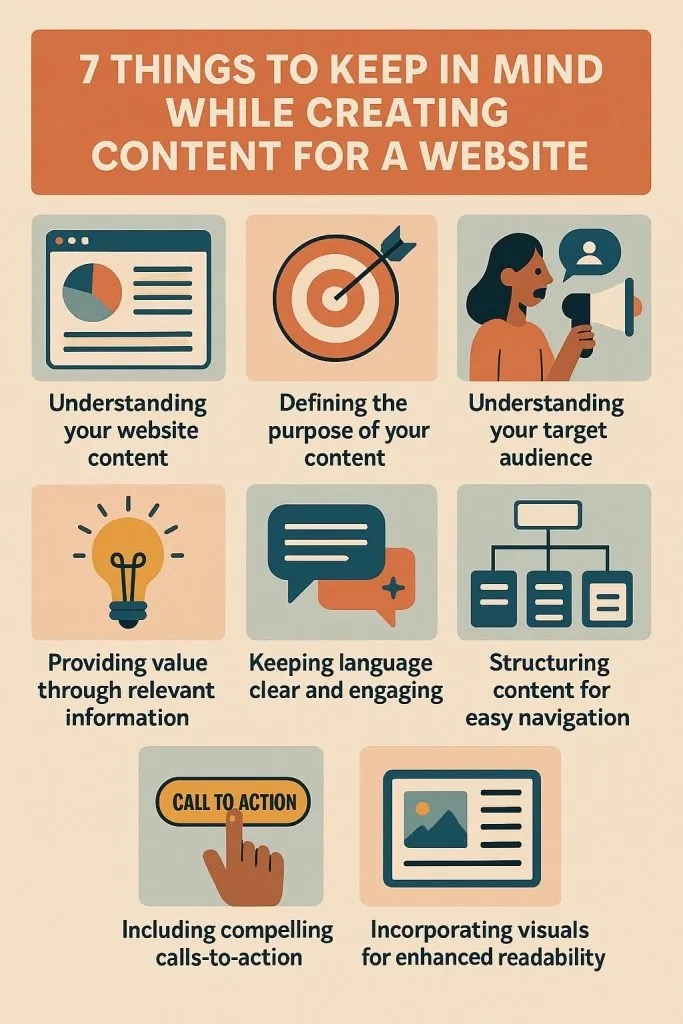
Ever felt like your site’s going unnoticed—like a party where only your mum shows up? If so, it might be time to revisit your approach to create content. Crafting compelling content isn’t just about words on a screen. It’s about forming a genuine connection with your readers, keeping bounce rates low, and gradually guiding visitors through your sales funnel. After all, a well-planned content marketing strategy can boost everything from brand awareness to conversion rate (Source:Content Marketing Institute).
Below, you’ll discover six essentials for creating high-quality content—from setting crystal-clear goals to nailing the perfect tone of voice for your audience. We’ll sprinkle in real-life examples, discuss some data, and offer a few rhetorical questions along the way. Ready to turn your pieces of content into crowd-pleasers? Let’s dive in.
Understanding your website content
Understanding your website content is like knowing the ingredients in your favorite recipe—it’s crucial for creating an effective content strategy. Website content includes all the information and media your site presents, from text and images to videos and audio files. This content serves as the primary means of communication between your business and your website visitors.
Effective website content can significantly increase dwell time, improve conversion rates, and drive more traffic to your site. By understanding your website content, you can identify areas for improvement and optimize it for better performance. Conducting a content audit can help you assess your existing content and determine what needs to be updated, rewritten, or removed.
Analyzing your website content also helps you identify gaps in your content strategy and uncover growth opportunities. Whether you add new blog posts, update old articles, or incorporate more visuals, understanding your content is the first step towards a more engaging and effective website.

Defining the purpose of your content
Imagine you’re a content writer whipping up a huge batch of blog articles. Before typing a single word, ask yourself: why am I writing this? Are you aiming to inform, entertain, or encourage potential customers to sign up for a mailing list? Each type of content you produce should serve a clear purpose—otherwise, it’s like setting your GPS to “anywhere” and hoping for the best.
A strong content marketing game plan ensures you’re not just posting at random. Instead, each piece of content fits neatly into your bigger content strategy. Perhaps you want to highlight a new product, share interactive content to boost engagement, or direct folks to a Downloadable content offer. Whatever your goal, pinpointing it upfront helps shape everything from your tone of voice to your calls to action (CTAs).

Understanding your target audience.
Picture this: you’re throwing a party (again), but this time, you’ve invited the wrong crowd. They don’t get your jokes, they’re not into your music, and they definitely aren’t fans of your snack selection. Ouch. The same goes for digital content—if you’re not talking to the right audience, your content ideas might fizzle. Start by building buyer personas that reflect different segments of your target audience’s demographics.
Are they tech-savvy millennials who enjoy long-form content? Or busy parents looking for quick, scannable tips? By tailoring your tone of voice and content type, you’ll create quality content that resonates—whether your readers are in the awareness stage or ready to buy.
Don’t forget about mobile optimisation. Around 60% of global web traffic comes from mobile devices (Source: Statista). If your content doesn’t look slick on a smaller screen, you risk losing potential fans before they’ve even had a proper look.

Providing value through relevant information.
Ever scrolled through a website that felt like empty fluff? Not ideal, right? Delivering genuinely helpful and relevant content builds trust, especially for Australian businesses looking to stand out on digital platforms. Think about the questions your audience asks—how can you solve those problems or satisfy that curiosity?
When you’re brainstorming content ideas, consider which topics are worth a deep dive (hello, long-form content) and which lend themselves to quick pointers or interactive content. You could also mix in user-generated content—like customer photos or testimonials—for an added layer of Social proof. That sense of community can turn casual onlookers into loyal enthusiasts.
If you’re not sure what’s truly valuable to readers, tap into data from Google Analytics. See which pages get the most traction, track bounce rates, and identify where visitors drop off. Once you’ve got the scoop, fine-tune your pieces of content to keep people coming back for more.

Keeping language clear and engaging.
No one wants to wade through a giant block of jargon. Using an active voice and conversational style makes your message more inviting. In fact, high-quality content often feels like chatting with a mate—still professional but free of waffle or pretentious words.
Studies show that readers tend to click away if they can’t grasp the gist quickly (Source: Nielsen Norman Group). So keep paragraphs short, vary your sentence length, and remember that plain English is your friend. Sure, you might occasionally throw in a metaphor, but only if it adds colour—not confusion.
Don’t be afraid to show empathy, humour, or even a dash of vulnerability. People gravitate toward brands that feel human. That’s especially important for business owners trying to connect with customers through content management systems like WordPress or HubSpot’s CMS.
Structuring content for easy navigation.
Ever wander through a shopping centre where none of the aisles are labelled? Frustrating, isn’t it? The same applies to your content management approach. A well-organised website—complete with headings, subheadings, and bullet points—lets readers find info without rummaging around and easily navigate to other pages.
Try grouping your *content into topic clusters. Each main topic (sometimes called a “pillar page”) links to and from related subtopics. This approach not only helps readers but can also support search engine optimization (SEO) efforts by building a logical framework around relevant keywords (*Source: Moz).
If you’re working with a content team, ensure there’s a clear approval process so your structure remains consistent across blog posts, product pages, and marketing page content. Cohesion is key to building familiarity and trust with your visitors.
Using headings and bullet points.
Feeling overwhelmed by text is a real turnoff. Headings create a range of visual breaks that help readers skim for what they need. Bullet points, on the other hand, are perfect for listing tips, stats, or next steps—like magic little signposts.
Improve scannability: Readers can quickly spot what’s relevant.
Support SEO elements: Search engines appreciate well-organised headings and lists.
Highlight compelling content: Distinguish your top takeaways in a glance-worthy format.
Whether you’re talking about content updates, sharing blog articles, or unveiling a brand-new development project, chunking info into headings and bullets ensures your message lands swiftly across all web pages.
Incorporating visuals for enhanced readability.
They say a picture’s worth a thousand words—but only if it complements your web content. Maybe it’s a relevant photo, an infographic stuffed with facts, or a short video that breaks down your content marketing strategy. The point? Pairing text with visuals can boost retention by up to 65% Source: Brain Rules).
Gone are the days of cluttered white backgrounds with minimal imagery. People expect a slick and visually engaging experience. Just make sure any types of images align with your brand identity and load fast—especially if your audience is browsing on mobile. Slow load times can be a real party pooper.
Including compelling calls-to-action for website visitors.
A compelling content piece often ends with a prompt—something that nudges readers towards the next step in the sales funnel, which is a crucial part of your website content strategy. Want them to download a PDF, sign up for your newsletter, or request a quote? Don’t bury it; make that CTA glow like a beacon.
CTAs also tie in beautifully with content management best practices. If you’re using a robust platform for publishing content (like WordPress or HubSpot), you can A/B test your CTAs to see which designs or phrases convert best Source: Semrush). That’s the beauty of digital: instant feedback and content updates whenever needed.
Just remember that less is more. A single, clear CTA often outperforms a laundry list of “click here” buttons.
Best Practices for Website Content Sections
Creating clear, concise, and engaging content for each section of your website is essential for resonating with your target audience. Each section, whether it’s the homepage, about page, or contact page, should have a specific purpose and goal. Optimizing these sections for search engines can improve visibility and drive organic traffic.
Using relevant keywords, meta descriptions, and header tags can help improve your search engine rankings. But it’s not just about SEO—designing your website content sections with user experience in mind is equally important. Make it easy for visitors to navigate and find the information they need.
Visual elements, such as images and videos, can enhance the user experience and make your content more engaging. Regularly updating and refreshing your website content keeps visitors engaged and encourages them to return. A content management system (CMS) can help you manage and update your website content efficiently, ensuring that your site remains dynamic and relevant.
Periodically updating content for relevance.
Think your current content is good enough forever? The internet moves at breakneck speed—stale posts or outdated references can feel like yesterday’s news. Regular content updates not only please your readers but also show search engines that you’re active and relevant (Source: Google Search Central).
Check in on older posts or pages to see if they need a refresh. Could you add new stats, rework the tone of voice, or embed a short video? This consistency in content creation signals that your site stays in tune with the times, boosting user trust.
Pro tip: Use Google Analytics to see which pages are performing well and which could use a facelift. That data can inform your next wave of improvements, ensuring an ongoing content perspective that resonates.
Finalising your content
Finalizing your content is like putting the finishing touches on a masterpiece. It involves reviewing and editing your website content to ensure it is accurate, complete, and engaging. A content style guide can help maintain consistency in tone, voice, and language across all your website content.
Proofreading and editing are essential steps in the content creation process to ensure your content is error-free and polished. Testing and iterating on your content can help you refine your message and improve user engagement. A content calendar can help you plan and schedule content in advance, ensuring consistency and efficiency.
Collaborating with other teams, such as design and development, can help ensure your content is integrated seamlessly into the website. Launching your content involves publishing it on your website and promoting it through social media platforms and other channels. Analyzing and measuring the performance of your content can help you identify areas for improvement and optimize your content strategy, ensuring that your website continues to thrive.
Executing search engine optimization strategies for visibility.
Search engine optimization (SEO) might sound like a buzzword, but it’s a fundamental element in any content marketing strategy to improve visibility in search engine results. Aim to sprinkle in high-performing keywords naturally—plus synonyms—throughout your text. Steer clear of stuffing them in like lollies; search engines hate that.
Also, pay attention to meta descriptions, title tags, and internal linking. These SEO elements are your golden tickets to better rankings, particularly for business owners looking to attract local leads. If your future projects involve a deeper dive into SEO, tools like Google Analytics or specialised platforms like Ahrefs can help you measure results and adjust your approach.
By balancing user-friendly readability with a smart SEO plan, you’ll stand out in a crowded field and invite more visitors to join the party.
Creating high-quality content doesn’t have to feel like a slog. When you define your goals, focus on clarity, keep an eye on content updates, and champion user-friendly layouts, you’re well on your way to building a site worth bookmarking. If you’re feeling stuck, remember you don’t have to go it alone—a content team or even a freelance content writer can help refine your digital content so it truly pops.
Addressing each of these seven considerations will engage your audience and set the stage for steady growth. Are you ready to host a party where everyone is eager to RSVP ‘yes’? Then start implementing these tips and watch your website thrive.