
Baffled by all the talk about copywriting—and not entirely sure what a copywriter does? Or maybe you’re hunting for rock-solid proof that good words make real money? Either way, you’re in the right place. In this article, we’re unpacking some mind-boggling copywriting statistics that reveal why the right text can turn casual readers into enthusiastic buyers— while poor writing drives them away faster than you can say “typo.”
But don’t stress if you’re not one hundred per cent clear on the whole concept of copywriting. Think of it as the art (and science) of crafting words that persuade, engage, and ultimately spark a desired action—like clicking that ‘Buy Now’ button or signing up for a life-changing newsletter. Some folks call it a revenue-driving superpower. Others describe it as an invisible sales force that works round the clock.
Continuous learning is crucial in copywriting. Enhance your skills by buying books and taking courses that offer practical guidance and feedback from experienced professionals.
When you’re flicking through social media posts or reading an email that stops you mid-scroll, that’s copywriting at its best—tapping into your emotions and forging a quick bond, even if you don’t realise it. With so much competition out there, it’s essential to find meaningful ways to hook your audience and convince them you’re worth their attention.
Still sceptical? I’ve compiled the ultimate batch of data that proves just how effective good copy can be. From how a single headline can reel in 80% more readers to the science behind CTAs that double conversion rates, these numbers don’t lie. Yet they’re more than trivia—think of them as your roadmap to writing that resonates.
Ready to discover fresh insights and stand out from the noise? Grab a coffee, settle in, and let these stats do the talking. You might just find your next big idea—or ten—within these pages. Whether you’re a curious beginner or a seasoned pro, these insights can sharpen your essential skills and spark inspiration.
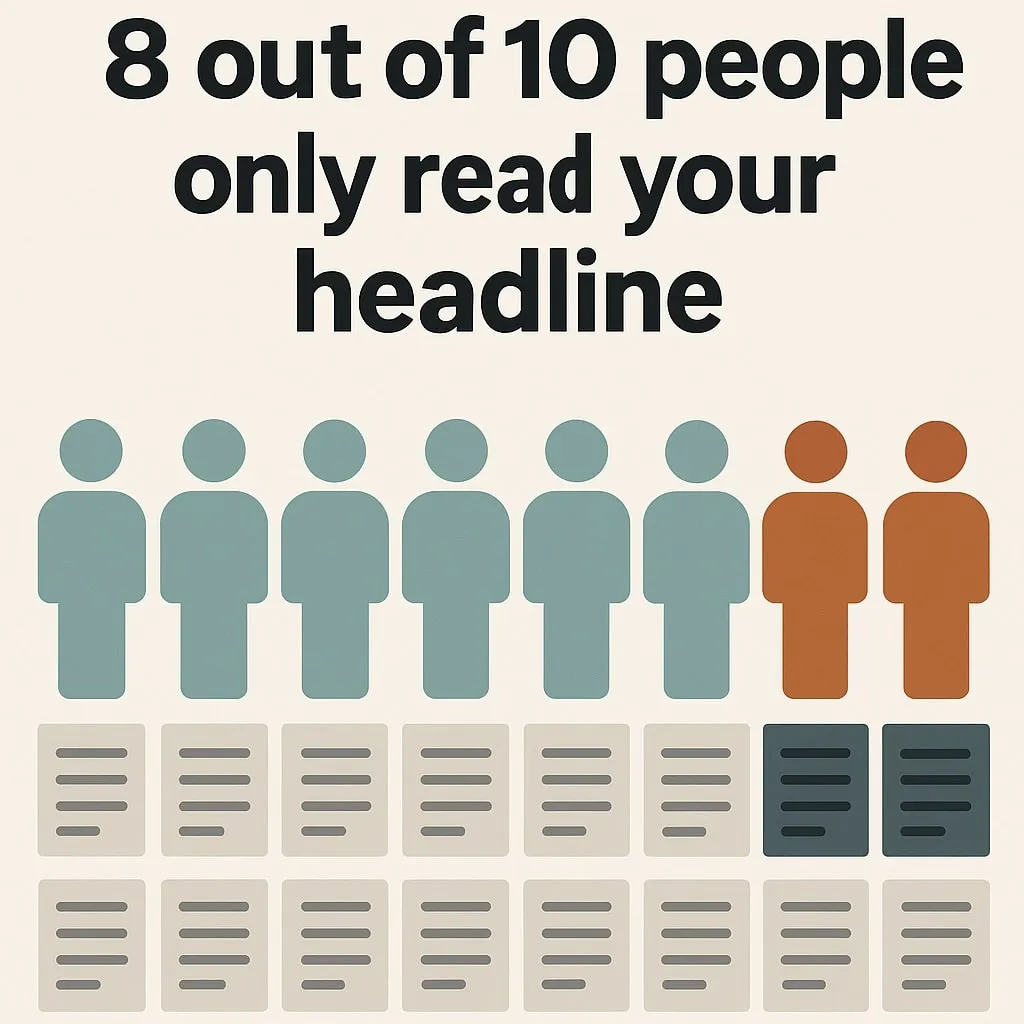
1. 8 out of 10 people only read your headline (Copyblogger)
You’ve spent hours—maybe days—crafting a brilliant piece of content. You’ve edited. You’ve polished. You’ve downed more coffee than you’d like to admit. Then you find out that 80% of people will only read your heading, skipping the rest. Ouch.
David Ogilvy famously said that once you’ve nailed a headline, you’ve spent 80 cents of your dollar. It’s harsh, but if your headline doesn’t hook, no one sticks around.
Take a leaf out of Ogilvy’s book—he rewrote that famous Rolls-Royce headline over 100 times. Tweak your own headlines until they sparkle. Need some practice? Try reworking headlines daily until you find that perfect combination of intrigue and clarity. Honing your craft in creating effective headlines is essential for capturing your audience’s attention.
2. Personalised calls to action can boost conversions by over 200% (HubSpot)
A classic copywriting fundamental involves nudging readers to click, buy, or sign up—often through calls to action (CTAs). We all know calls to action are essential. But it turns out that generic CTAs aren’t always enough. In fact, personalising them can lead to a 202% spike in effectiveness.
Think about it like pancakes—CTAs are the syrup that pulls everything together. Without them, you’re left with a dry stack of content. And no one wants that. Instead of the usual “Buy now,” try something more customised, such as “Grab your tailored marketing plan.” By addressing your reader’s needs directly with relevant content, you’ll stand out in a crowded inbox or webpage.
3. 74% of readers notice spelling and grammar mistakes (RealBusiness)
Ever visited a website—only to spot sloppy spelling errors or grammar slip-ups? Did it make you wonder if the business was legitimate?
Copywriting skills typically include proofreading for a reason: 74% of people will judge your brand if you don’t tidy up your copy. The conclusion? Don’t risk your credibility. Grab a grammar tool or hire an editor to ensure your text sparkles. The stakes might seem small, but those red flags can cost you leads. Focusing on personal development can significantly enhance your copywriting skills, ensuring you maintain credibility and effectively engage your audience.

4. Readers only skim about 20% of a page (Nielsen Norman Group)
So you’ve poured your heart into a 3,000-word masterpiece, only to realise folks usually read about 600 words before bouncing. Depressing, right? But that’s how modern readers roll—they’re pressed for time and hungry for quick answers.
What’s the best way to adapt? Use strong headings, bullet points, and short paragraphs. Part of it is guiding the reader’s eye—and hooking their interest at each scroll. Make your subheadings stand out with persuasive. bold messages, and people might hang around a little longer.
5. Social proof can boost your newsletter signups by 20% (Unbounce)
If you’re building an email list, showcasing how many subscribers or potential customers you already have can significantly lift signups. It’s all about social proof—coined by psychologist Robert Cialdini in 1984. When people see that “4,500 other readers subscribe,” they think, “Well, maybe I should subscribe too.”
That’s definition of a skilled copywriter strategy right there: weaving in credibility markers like subscriber counts or testimonials. Next time you create a sign-up page, include those proof points and ensure the content resonates with your target audience. You’ll likely see more folks opting in.

6. Over 60% of marketers say visuals are essential (ImpactBND)
Chances are, your copy might not be enough on its own—copywriting tips often include pairing words with pictures. Visual content breaks up text, shows off your offer, and helps readers imagine what they’re getting. Effective visuals are crucial in advertising, as they enhance the copy’s ability to sell products or services across various mediums.
One legendary example is the playful Land Rover ad mocking Ogilvy’s Rolls-Royce piece. The bold image and witty heading instantly convey the selling point: “At 60 miles an hour the loudest noise in this new Land-Rover comes from the roar of the engine.” Iconic, right?
7. 73% of businesses hire someone to manage content strategy (Content Marketing Institute)
Most companies recognise that writing blog posts, ads, and landing pages is time consuming—and they’d rather pay professionals. If you’re aiming to be a successful copywriter, highlight your ability to create a solid content strategy. Showcasing your expertise in your niche can attract a variety of clients, from small businesses to large companies, who are looking for skilled professionals to handle their content needs. It’s a massive selling point when businesses are itching for an expert who can take the load off their plate.

8. Third-grade reading level emails get 36% more responses (Boomerang)
Don’t be tempted to shower your audience with fancy jargon. Turns out, simpler, more concise language resonates better—often leading to a whopping 36% increase in email replies. When you’re drafting copy, picture chatting with a mate over coffee: keep it friendly, keep it clear.
It’s the heart of what an exceptional copywriter does: bridging the gap between brand and reader. The more straightforward your messaging, the wider your net for converting customers. Sure, some industries might require technical language, but creating written content that resonates with your audience can go a long way.
9. Average ad click-through rate sits at 1.91% (HubSpot)
Ads are made up of concise language—and, often, a dash of wit. If you’re chasing a higher click-through rate (CTR), your copy needs to do some serious heavy lifting. Whether it’s a short Google ad or a flashy Facebook campaign, the principle stays the same: speak to one specific pain point, weave in a clear benefit, and cap it off with a strong CTA.
Remember, an improved CTR means more potential sales. So, if you’re what a copywriter in an ad agency, you’ll spend a lot of time refining short, punchy lines that get clicks. Creating effective sales copy that addresses specific needs and desires is crucial for this process.

10. Freelance copywriters can earn over $250 per hour (Freelancing Hacks)
Yes, you read that right. One of the big reasons people ask, “How do I get into the copywriting industry?” is that the earning potential can be sky-high. If you’re ready to tackle challenging projects, build a strong portfolio, nail a thousand tones of voice, and deliver top-quality results, you could eventually charge premium rates.
For business owners, that might sound pricey. But think about the return. Hiring an experienced copywriter who has incredible writing skills can lead to huge revenue gains. Effectively communicating your skills and services is crucial for attracting new clients, making it a worthwhile investment.
11. Landing pages under 100 words can convert 50% better (Mirasee)
Sometimes, brevity truly is the soul of wit. Too much text can intimidate readers—especially when they’re just looking for a quick yes or no. Understanding the key elements of persuasive writing is crucial for creating effective landing pages.

12. Adding “because” boosts compliance from 60% to 94% (Codeless)
It’s simple psychology: people like reasons. When you slip in “because,” they feel more motivated to listen, creating messages that drive them to take action.
13. Just 20-28% of web content is actually read (KhrisDigital)
It’s another reminder to structure your content, blog posts, and marketing materials with bullet points, visuals, and subheadings—make that 20% count by ensuring your content applies to your audience’s needs!

14. Videos on landing pages can increase conversions by up to 80% (Luciano Viterale)
Got a big product reveal? A short explainer video with a great tone of voice that matches your business audience often seals the deal by crafting messages that resonate with them.
15. Businesses with 30+ landing pages see more leads (Techjury)
More landing pages = more chances to capture people’s attention and measure strategies. Creating multiple landing pages ensures that the content applies to different segments of the audience, addressing their specific needs and pain points.
16. Simplifying pages boosts conversions by up to 266% (Techjury)
When in doubt, strip away clutter. A single strong offer is usually better than a buffet of distractions, allowing you to create copy that’s clear and concise.
17. Fewer form fields = higher conversion rates (WebsiteBuilderExpert)
Each extra request for info can cause friction. If it’s not essential—cut it. Ensure the form fields are relevant to the audience’s needs to improve engagement and conversion rates.
18. 90% of readers check the CTA if the heading is solid (Cience)
Strong headings basically lure your audience straight to the finish line. Don’t waste that momentum; instead, focus on writing that motivates readers to take action.
19. Using lists every 500 words can increase traffic by 70% (MarketSplash)
People love scannable content. Professional copywriters know that lists, bullet points, and headers break down info into snackable pieces.
20. Addressing objections directly builds trust (Massive Peak)
Show readers you understand their doubts, then tackle them head-on with compelling messages that resonate with the audience—copywriting techniques 101.
21. Storytelling increases engagement (GetResponse)
A brand story or a customer journey can move hearts—and wallets. It’s a powerful way to humanise your message.
22. Hashtags can double engagement (Mirasee)
Use them wisely, though—spamming hashtags can backfire. Aim for clarity over clutter.
23. Accessibility boosts reach (Sprout Social)
Writing in plain language and using CamelCase for hashtags (like #CopyWriting) helps people using screen readers. Inclusivity matters. Creating relevant content is essential for making your message accessible and engaging.
24. Ideal X (Twitter) post length is around 240-259 characters (HubSpot)
Short, snappy posts are your friend. Active voice is best—tell people exactly what you want them to do.
25. LinkedIn offers some of the best ROI (HubSpot)
If you’re in a B2B industry or corporate, LinkedIn might be your goldmine for creating relevant content that addresses the needs of your audience.
26. Instagram suggests 3-5 hashtags per post (HubSpot)
Less is more when it comes to the ’Gram. Focus on using hashtags that are relevant to your readers for a tighter, more efficient reach.
27. 81% of emails are opened on mobile (Mirasee)
If your emails aren’t mobile-friendly, they’re going straight into the digital dustbin. Ensure your emails are not only mobile-friendly but also relevant by addressing your client’s needs and pain points.
28. Optimal subject lines hover around 44 characters (Codeless)
That sweet spot ensures readers see your entire hook, even on mobile devices.
29. A/B testing emails boosts ROI by 37% (Passive Secrets)
No one gets email copy perfect on the first try. Keep testing to ensure your emails are relevant and address your audience’s needs!
30. “Free” in your subject line can spike opens by 29% (Luciano Viterale)
Who doesn’t like free stuff? Just make sure you can back it up with genuine value.
31. 6-word headings often perform best (KhrisDigital)
Brevity, once again, is key. Save the juicy details for the email body.
32. Schema markup helps with voice search (Backlinko)
If you’re a content writing services agency, take heed. The future of SEO is voice search. Voice results often pull from structured data. If you’re not using Schema, you’re missing out on potential featured snippets.
33. High engagement equals higher video rankings (Backlinko)
YouTube’s algorithm loves likes, shares, and comments. Spark conversation with compelling scripts.
34. Social media can help build links by 22% (Ahrefs)
Get social with your content to net more backlinks—vital for search engine rankings.
35. Only a tiny fraction of keywords exceed 10 monthly searches (Ahrefs)
This stat might surprise you: 94.74% of keywords receive ten or fewer searches. Long-tail strategies can still pay off big.
36. SEO copywriting balances keywords with readability (Search Engine Journal)
Yes, you want to optimise for “what are copywriting jobs” or “copywriter jd”—but not at the expense of clarity. Aim for natural-sounding content that appeals to both humans and Google.
Ready to take that next step? Apply these tips to your own projects. Or if you’re swamped with deadlines, consider hiring a pro who meets your professional copywriter needs.
Whichever path you choose, remember: words are powerful. Use them wisely, and your readers—and your bottom line—will thank you.